
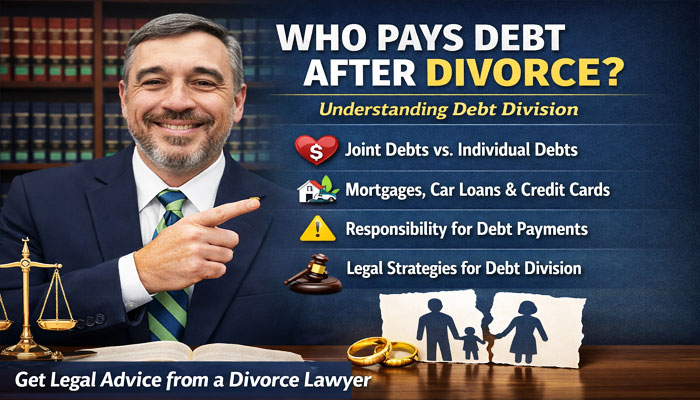
One of the most stressful financial questions during divorce is simple but critical: who pays the debt after divorce?
Many spouses assume debts automatically follow the person who created them. However, divorce courts focus on equitable distribution, meaning debt just like property must be divided fairly.
Understanding how debt responsibility works can protect your credit score, financial stability, and long-term future.
Types of Debt Commonly Divided in Divorce
Divorce courts examine all marital financial obligations, including:
Credit Card Debt
Credit card balances accumulated during marriage are often considered marital debt even if only one spouse used the card.
Courts evaluate:
- Purpose of spending
- Benefit to the household
- Income differences between spouses
Mortgage Debt
When spouses own a home together, mortgage responsibility becomes one of the largest divorce issues.
Possible outcomes include:
- Selling the home and splitting proceeds
- One spouse refinancing the mortgage
- Temporary shared responsibility
Learn more about property and financial division here:
Auto Loans
Vehicle loans may be assigned to the spouse who keeps the car, but lenders are not bound by divorce orders unless refinancing occurs.
Student Loans
Student debt division depends on:
- When loans were incurred
- Who benefited from education
- Increase in earning capacity
Courts sometimes treat student loans as separate debt, but not always.
Personal Loans & Business Debt
Business owners and entrepreneurs frequently face disputes involving:
- Business credit lines
- Investment debt
- Personal guarantees
These situations often require strategic legal planning.
Marital Debt vs Separate Debt
A key issue courts analyze is classification.
Marital Debt
Usually includes debt acquired during marriage for shared benefit.
Examples:
- Household expenses
- Joint credit cards
- Family travel
- Home improvements
Separate Debt
May include:
- Debt incurred before marriage
- Hidden spending without spouse knowledge
- Post-separation financial obligations
Proper classification significantly impacts responsibility.
Important Truth: Divorce Does NOT Remove Your Name From Debt
This is one of the biggest misunderstandings in divorce.
Even if a divorce decree assigns debt to one spouse:
👉 Creditors may still pursue both spouses if accounts remain joint.
That means missed payments by your ex-spouse can damage your credit.
Before finalizing divorce agreements, discuss protective legal strategies:
How Courts Decide Who Pays Debt
Judges consider multiple factors:
- Income and earning capacity
- Who incurred the debt
- Purpose of spending
- Property division balance
- Child support and spousal support obligations
The goal is equitable, not necessarily equal, distribution.
Strategies to Protect Yourself Financially
Experienced divorce attorneys often recommend:
- Closing joint accounts immediately
- Refinancing shared loans
- Monitoring credit reports
- Negotiating asset-for-debt tradeoffs
- Including indemnification clauses in settlements
Early financial planning prevents post-divorce disputes.
Common Debt Mistakes During Divorce
Many individuals unknowingly create long-term financial risk by:
- Leaving joint credit cards open
- Assuming court orders bind lenders
- Ignoring tax consequences
- Accepting debt without reviewing assets
- Failing to document spending history
High-conflict divorces especially require strong financial strategy.
Schedule confidential legal guidance today:
Why Legal Guidance Matters
Debt division is not simply accounting it is legal risk management.
An experienced family law team helps:
- Identify hidden liabilities
- Protect credit ratings
- Structure enforceable settlements
- Prevent future financial disputes
Working with knowledgeable counsel ensures your divorce settlement supports long-term financial stability.
FAQ
No. Courts divide debt equitably based on financial circumstances and fairness.
You may be responsible if the debt was incurred during marriage or if your name is on the account.
Yes. Creditors can pursue anyone listed on the loan regardless of divorce orders.
You may return to court to enforce the divorce decree or seek reimbursement.
Yes. Closing or refinancing joint accounts protects your credit after separation.