
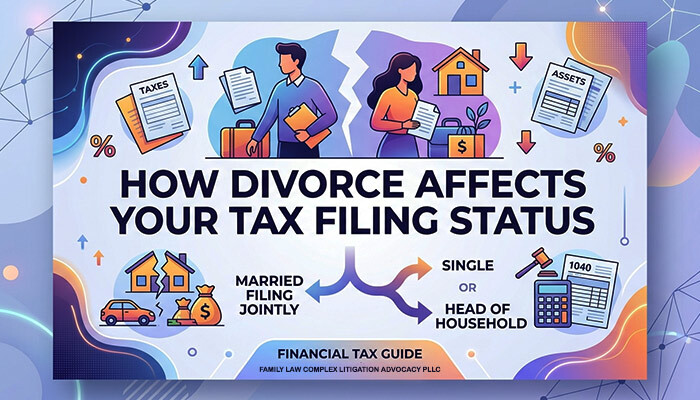
Divorce is not only an emotional and legal transition it also significantly impacts your financial life, especially your tax filing status. Many individuals going through divorce are surprised to learn that decisions made during a divorce can directly affect tax obligations, refunds, deductions, and long-term financial stability.
Understanding how divorce affects your tax filing status is essential to protecting your financial interests and avoiding costly mistakes. Working with experienced family law attorneys for legal advice can help ensure that both your divorce settlement and tax decisions align properly.
If you are considering separation or currently involved in litigation, visiting our Divorce Representation page can help you understand your legal options:
Your Tax Filing Status During Divorce
Your marital status on December 31 determines how you must file taxes for that year.
1. Married Filing Jointly
If your divorce is not finalized by the end of the tax year, you may still file jointly.
Advantages
- Lower tax rates
- Higher deductions
- Larger credits
Risks
- Shared liability for tax errors
- Responsibility for spouse’s unpaid taxes
A Washington divorce attorney can help determine whether joint filing is financially beneficial during pending divorce proceedings.
2. Married Filing Separately
Some spouses choose separate filings to avoid financial liability connected to the other party.
This option may be appropriate in high-conflict divorce or high-asset divorce cases involving financial disputes or hidden income concerns.
3. Single Filing Status After Divorce
Once the divorce is finalized before December 31, you must file as Single or possibly Head of Household.
Your divorce decree often determines financial responsibilities affecting tax reporting.
4. Head of Household Status
You may qualify for Head of Household if:
- You have primary custody of a child
- You paid more than half the household expenses
- The child lived with you for more than six months
This filing status often provides major tax advantages following divorce.
For personalized guidance, schedule a consultation with our legal team:
Child Tax Credits After Divorce
One of the most disputed tax issues in divorce involves who claims the children.
Courts or settlement agreements typically determine:
- Child tax credits
- Dependency exemptions
- Education credits
- Childcare deductions
Proper legal drafting ensures compliance and prevents future disputes. Our attorneys frequently assist clients in structuring parenting and financial agreements that reduce tax conflicts.
Learn more about our legal team:
Spousal Support and Tax Implications
Tax laws changed significantly under federal regulations.
Important Rule:
For divorces finalized after 2018:
- Spousal support is not tax-deductible for the payer.
- The recipient does not report alimony as taxable income.
This makes strategic divorce planning more important than ever.
Property Division and Tax Consequences
Many divorcing spouses assume property division is tax-free. While transfers between spouses are usually non-taxable during divorce, future tax consequences can arise.
Examples include:
- Retirement account withdrawals
- Capital gains from selling the marital home
- Stock or investment transfers
- Business ownership restructuring
High-asset divorce litigation requires careful financial and legal coordination to prevent unexpected tax liabilities.
Filing Taxes While Divorce Is Pending
If your divorce is ongoing, you should:
- Gather financial records early
- Track separate expenses
- Avoid hiding income or assets
- Consult both a divorce attorney and tax professional
Legal strategy and tax planning should work together not separately.
If you are facing complex financial issues, contact our firm for guidance:
Why Legal Guidance Matters in Divorce Tax Planning
Divorce settlements directly affect taxes for years after the case ends. Poorly structured agreements may lead to financial penalties, IRS disputes, or unfair financial outcomes.
At Family Law Complex Litigation Advocacy PLLC, we help clients navigate divorce with strategic planning focused on long-term financial protection.
Whether your case involves custody disputes, high assets, or complex financial matters, early legal advice can make a significant difference.
FAQ
Yes. Your tax filing status depends on whether your divorce is finalized before December 31 of the tax year.
No. Typically only one parent claims the child unless a court order or agreement specifies alternating years.
It depends on financial risk and cooperation between spouses. A divorce attorney can evaluate the best option.
For divorces finalized after 2018, alimony is generally not taxable income or deductible.
Ideally before filing for divorce so financial strategy and settlement planning align.
Call to Action
Divorce decisions today can affect your taxes for years to come.
If you have questions about divorce tax filing status, financial disclosure, or protecting your assets, speak with an experienced Washington divorce attorney today.